
The Shrug - More than a gesture

Shrugging our shoulders is a familiar way to communicate indifference, uncertainty, or a lack of knowledge. We do this by lifting the shoulders toward the ears.

This simple shoulder girdle movement is one of the best examples of scapular movement ON the chest wall (Blog #7 - Scapular movement: ON the ribs or WITH the ribs?).
We can easily observe the scapula move upward, but we cannot identify, from a functional standpoint, WHY we shrug.
Aside from using this movement as a gesture...
WHEN DO WE SHRUG?
We shrug or elevate the shoulder spontaneously throughout the day.
Just like shoulder girdle depression (Blog #13), the elevating shoulder girdle can ‘shrug’ up and forward or up and backward. The shoulder girdle elevates forward when carrying a backpack or a heavy suitcase. It elevates backward during movements like the overhead serve in tennis or volleyball. The leading arm also elevates backward during the golf backswing. In fact, this up-and-back position combined with scapular external rotation and adduction is THE POWER position for almost all sports requiring explosive upper body power.

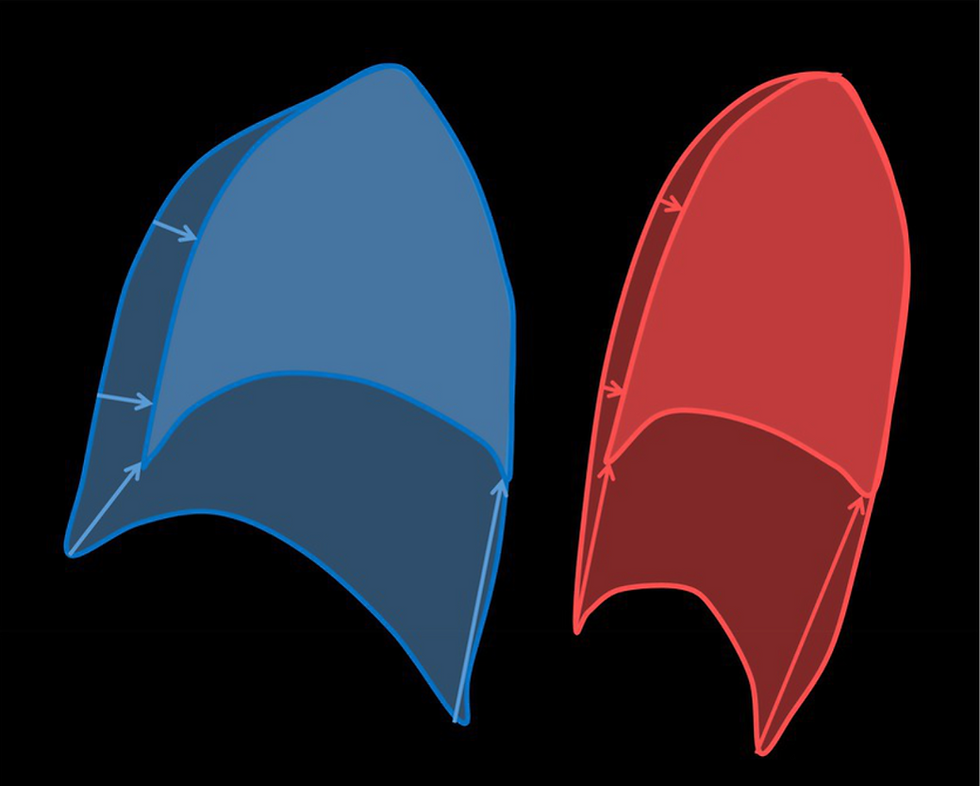
With anterior or forward elevation of the scapula, the scapula follows the contours of the upper ribs. Moving WITH the upper ribs, it rotates medially and tips forward as it is shrugged upward.
This 'up and forward' scapular position is associated with some of our most strenuous upper limb lifting, pushing and pulling
With posterior, or backward elevation of the scapula, the scapula and ribs 4-8 elevate as the arm is brought up and back into an abducted, externally rotated and slightly extended position.
Whether elevated forward or elevated backward, the scapula is in a position that is recognized as a position of power, and in both scenarios this position of power relies on a stable rib/scapular relationship, where the ribs and the scapula move upward together.

The scapula also elevates when the arm extends its overhead reach or reaches
behind the back.

Overhead - When the glenohumeral joint and the shoulder girdle have reached the end of their range, the shrug assists the arm to reach a little higher.
Backward - Observe the shrug that we never notice (see photo below).

Shoulder extension starts with a backward swing at the glenohumeral joint, but we often need to reach further back, either to reach something behind us or to perform an activity such as an underhand throw or serve.
This backward reaching shrug accompanies and safely increases arm extension ROM.
The shrug appears to assist with shoulder extension, but it also plays a role in the posterior position of power.
With the arm in the sagittal midline,
the elbow bent, the glenohumeral joint abducted to about 90 degrees and fully externally rotated, there is no shoulder shrug. There is rib elevation at the T4-8 levels (as discussed and demonstrated in Blog #7), but there is no evidence that the upper ribs have elevated. If the arm is extended backward, behind the sagittal midline - the scapula will appear to "adduct" and the shoulder will shrug.
The shrug seems to play an integral role in enhancing power and ROM of the arm.
HOW can this simple upward movement of the scapula play such an important role as it appears to do in these examples?
A closer look at the scapulothoracic muscles:
When we investigate which muscles participate in the shoulder shrug, we get a mixed message. Sometimes, the upper trapezius alone is credited with this upward scapular movement, and sometimes, four scapulothoracic muscles are recognized: Upper trapezius, serratus anterior, rhomboids, and levator scapula. We are instructed to strengthen these four 'shrug' muscles because they are essential for enhancing posture, stability, and shoulder support.
The Upper trapezius, the most easily recognized and deemed the ‘primary’ muscle responsible for scapular elevation, has no direct attachment to the ribs. It can lift the scapula ON the ribs, but not WITH the ribs. The upper fibres of trapezius, on their own, do no more than slightly lift the scapula ON the ribs, resulting in a visible ‘shrug’ of the scapula. As a result, the strength potential for this isolated performance is extremely limited.
The entire trapezius muscle (upper, middle and lower parts) originates along the spine, midline and posteriorly, from the head to the spinous process of T12. Its scapular attachment is superficial and extensive. It attaches to the spine of the scapula, the lateral margins of the clavicle and the acromion. Trapezius provides extensive thoracic attachment via the spine, but it has no attachment to the ribs.
The serratus anterior (upper, middle and lower parts) is often omitted on lists of muscles responsible for shoulder shrugging. It begins at the upper parts of ribs 1 through 8 and connects to the entire anterior surface and medial border of the scapula. It has a broad attachment to the ribs but does not directly connect to the spine. (Blog #6 - Serratus Anterior - Discovering its form, shape and structure).
The rhomboids (major and minor) extend upward from the medial scapular border to the spine, and the levator scapula has connections at the upper/medial scapular border and the posterior transverse processes of C1-4.
This shared myofascial attachment at the medial scapular border creates a functional link between serratus anterior and the spine. The spine becomes the stable base, and the mobile ribs become the effectors. While the scapula can and does move, its complex muscular attachments provide a multifunctional design. (It can do two or more things at once).

Meyers, T. Anatomy Trains 1991
When these scapulothoracic muscles work together, the scapula and ribs are encapsulated by shared and balanced forces, so when the shoulder girdle appears to ‘shrug’…it is accompanied by a subtle but essential elevation of the upper ribs.

The first and second ribs together create the upper and middle branches of serratus anterior.
Their separate nerve supply, their size, and a myofascial connection with the intercostals suggest a role in elevating and stabilizing the first two ribs. Upper ribs working independently from lower as needed (Blog #6).
Four muscles: the trapezius and the serratus anterior (working together as the primary muscles), levator scapulae and the rhomboids (secondary), are required here if the upper limb and the thorax are to work together to provide this powerful and reliable link between the upper limb and the thorax.
So...HOW does the 'shrug' enhance posture, stability, and shoulder support?
It achieves this by effectively engaging all four scapulothoracic muscles, as demonstrated by the elevation of the upper ribs along with the shoulder girdle.
How do we know if the upper ribs are elevating when we shrug?
With simple palpation skills, you can monitor upper rib movement, either on yourself or on a patient.
Place your right index and middle fingers in between the upper left ribs, anteriorly, just below the clavicle, approximately 1/3 the distance from the midline.
To eliminate the elevation that occurs normally with the breath IN, wait until the end of the breath out. Then, actively lift or 'shrug' the shoulder girdle UP (forward or backward), through its full range of movement. After the shoulder girdle has started to lift, you should feel the upper ribs lift, along with the shoulder girdle.
If you hold a weight or pull up on a theraband while shrugging, the accompanying rib elevation may be more noticeable.
Because I have serratus anterior palsy on one side, I can test and compare the normal side and the affected side. This video was done with no weights in my hands. The right side shrugs, and the upper ribs also lift. The left side shrugs, and there is no movement in the upper ribs.
Clinical perspective:
Resisted shrugs are often prescribed for improving strength in the scapulothoracic muscles (trapezius, levator scapulae, rhomboids and serratus anterior). For many, this exercise is effective because their scapulothoracic muscles can work together in a balanced, well-coordinated fashion. For those with chronic shoulder conditions, especially those associated with some neck pain and tenderness in the upper trapezius muscle, the weighted shoulder shrugs will almost always exacerbate their symptoms.
Now that we understand how rib elevation must accompany shoulder girdle elevation when a resisted shoulder shrug is performed, we have a clinical tool that should identify patients who have incomplete or ineffective scapulothoracic muscle contributions.
Because serratus anterior is the primary "linking" muscle between the ribs and the scapula, serratus anterior weakness or palsy should be considered.
How about arm extension? Do the ribs lift when the arm extends?
Using the same techniques as above, you will discover that they do, more so as the arm extends further.
Again, I can demonstrate how upper rib elevation occurs on the normal right side and does not occur on the affected left side (SAP).
Arm extension right – Video link
Arm extension left – Video link
After viewing the videos and exploring this phenomenon yourself, you might be thinking...
OK - the upper ribs elevate when we shrug - just like the lower ribs elevate when the arm is elevated....WHY? Is this subtle shift in rib position important?
As someone who can demonstrate a normal side and an affected side, this subtle loss of rib elevation has significant real-life consequences.
The consequences fall into two categories:
Strength and stability
Neurodynamics/ROM
Strength and Stability: The costovertebral joints are credited as the most important stabilizers of the thorax. (Oda et al. Spine 2014)
Ribs #1-7 posteriorly rotate in full inhalation and anteriorly rotate in full extension (Beyer B. et al. 2014)
Posterior rib rotation occurs with inspiration, but maintaining and supporting this elevated position eccentrically during expiration requires serratus anterior.


Pages 12 and 13 of Blog #12 - The Thoracic Connection, describes how serratus anterior acts like a shunt muscle, increasing compression and stability as the rib lifts.
While abdominals and serratus work together with the diaphragm to stabilize the thorax in either flexion (exhale/lower limb/abdominal control greater than serratus anterior) or extension (inhale/upper limb/serratus anterior dominant), this muscular tug of war works continuously to maintain stability.
Thoracic extension during inhale relies on the diaphragm. Serratus anterior is required during the exhale to maintaian rib position. The extended costovertebral joints are close-packed when they are extended -providing structural support to the elevated ribs. Serratus anterior optimizes joint mechanics using eccentric control and shunt muscle design.
Neurodynamics/ROM
The upper ribs are unique because they can be lifted and stabilized in a position that supports and protects the neurovascular tissues as they travel from the neck into the arm. Forces such as gravity or traction to the arm and shoulder girdle will result in lengthening or compression of these neurovascular tissues. The health of these tissues can be compromised. While both neural and vascular tissue can be involved (thoracic outlet syndrome), the more familiar and more widely recognized symptoms are those that are the result of compromised neurodynamics.

The concept of increased neural tension was first documented as early as the 19th century, but it was during the 1970's and 80's that Bob Elvey first developed the Upper Limb Tension Tests (ULTTs). In the 1990's, David Butler extensively researched and substantiated the clinical testing of neurodynamics, and more recently, Michael Shacklock has refined the concept around the mechanical and physiological interdependence of nerves.
All upper limb tension tests begin with depression of the shoulder girdle (and upper ribs). This shoulder girdle position is maintained as the arm is moved segmentally, further away from the body and into arm positions that further increase neural tension for each of the major upper limb nerves; the sensitivity is reported by the patient.
Neural tension testing has become an accepted standard test used by physiotherapists, especially those in the orthopedic specialties.
Releasing the shoulder girdle and upper ribs allows them to elevate, restoring axioplasmic flow and allowing normal neurodynamics in the region. The long, major nerves of the upper limb (median, ulnar, and radial) have sensory branches. As a result, increased tension to each of these nerves will, at some point during testing, result in sensitivity.
The nerves supplying most of the shoulder girdle muscles, the long thoracic nerve, for example, are motor only, with no sensory branch. As a result, sustained stretch of nerves that supply muscles of the neck and shoulder girdle will not immediately cause soreness or sensitivity. Pain resulting from secondary inflammation and local tissue irritation will present itself 1-2 days later.

Clinical perspective: When I wrote this book, I had over thirty years of hands-on clinical experience as a physiotherapist, but my understanding of LTNP was very limited. To learn more about managing it, I monitored my symptoms and, over a period of about two years, developed a management strategy. Some of my suggestions were familiar and based on good general advice following an injury, but some of my suggestions were very unusual. This chart is an example of unusual advice I provided based on my experience.
You will notice that every single example shown here fits into one of our two categories today:
reaching FULLY overhead
reaching backward into extension
I did not understand, at that time, that shoulder shrug with rib elevation must accompany these movements. I just knew that if I did any of these stretches or performed any activity that put my arm into one of these positions (reaching into the back seat of the car or kicking in the pool while holding a flutterboard overhead), I would flare up - several days later.
Headache, neck and arm pain and fatigue - often lasting 5-7 days.
Nerves rely on an unimpeded, continuous flow of nourishment within the axon (axioplasmic flow) to feed themselves and maintain tissue health. A disruption of this flow has consequences. With no immediate sensory feedback, the cause of a flare-up of symptoms is difficult to isolate or pinpoint. Because there is no immediate sensitivity while performing the offending activity, the activity continues, resulting in severe consequences several days later.
Summary
Something as ubiquitous as the shoulder shrug can offer insight that leads to a significant breakthrough in the understanding of how the scapulothoracic mechanism can efficiently blend the thorax with the upper limb.
While diagnostic imaging and the interpretation of complex scientific data are here to stay, we need to remember that without core clinical skills - observation, palpation and communication with the patient- there will be nothing new to investigate.
Next blog...will take a look at the scapula and the fourth dimension...Putting it all together.


Comments